
Key Takeaways
- Discover how to visit Messines Ridge on a full-day private tour starting directly from your hotel in Bruges.
- Explore key historical sites, including the massive Spanbroekmolen crater and the Island of Ireland Peace Park.
- Hear the personal stories of the British, Irish, Australian, and New Zealand troops who fought in the 1917 Battle of Messines.
Published: 4 June 2026
Intro
The best way to explore the story of the 7 June 1917 Battle of Messines from Bruges is with Visit Flanders Fields. From your hotel in Bruges our private WWI battlefield tour takes you south to the ridges near Mesen (Messines), where tunnellers laid 19 enormous mines beneath German positions and blew them in the early hours of 7 June. We retrace the steps of New Zealand, Irish, Australian and British troops who stormed the heights after the explosions. This guide explains why the battle mattered, introduces the human stories involved and shows how to visit the ridges, craters and memorials today.
Mines and the Battle of Messines assault
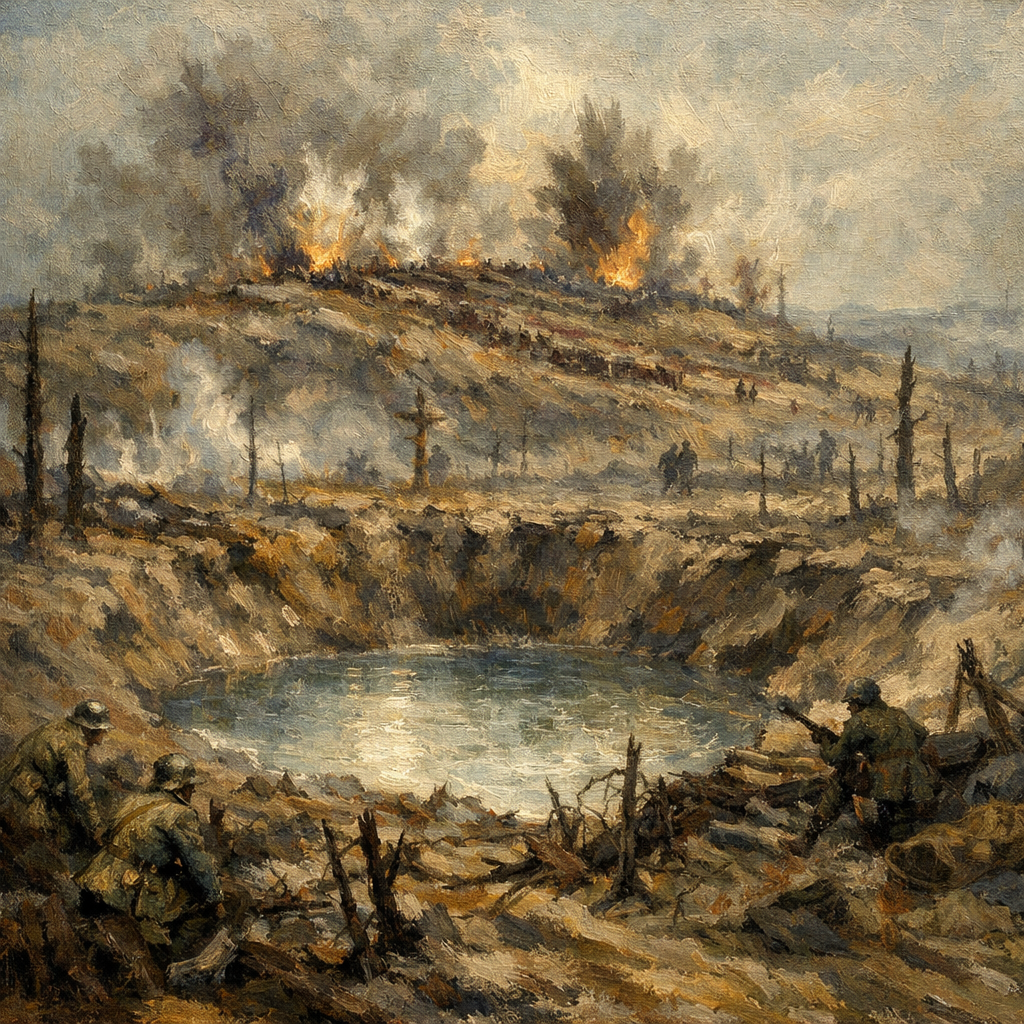
General Sir Herbert Plumer’s Second Army planned the Messines attack with meticulous care. Tunnelling work beneath the ridge began in 1916 and culminated at 3.10 a.m. on 7 June 1917 when 19 mines, packed with over 450 tons of explosives, were detonated; the blasts were heard in London and threw thousands of German defenders into shock and confusion. New Zealand battalions of the 2nd and 3rd Rifle Brigades immediately went over the top, advancing towards the ruined village of Messines, while Australian and British units moved up on their flanks. A creeping artillery barrage protected them and systematically lifted as the infantry advanced. By midday the ridge and the strategically important villages of Messines and Wytschaete were in Allied hands; Plumer’s bite-and-hold tactics yielded one of the most successful Allied victories of the war and more than 7,000 German prisoners were taken.
This success came at a cost. The New Zealand Division suffered 3,700 casualties in just three days, 700 of whom were killed. Among them were young riflemen barely out of training and veterans from Gallipoli. Their letters home describe the terrifying roar of the mines and the eerie silence afterwards, broken only by the whistles ordering the advance. Our tour brings these human stories to life at sites like the Spanbroekmolen crater, one of the vast holes created by the mines, and at the Messines Ridge British Cemetery, where rows of headstones remind visitors of the price paid for the fleeting success.
Messines Ridge memorials and sites to visit
The road south from Bruges leads first to the Island of Ireland Peace Park. This 33-metre-high round tower, built using stone from across Ireland, was opened in 1998 by the presidents of Ireland and Belgium and Queen Elizabeth II. The memorial honours soldiers from both Catholic and Protestant communities who fought and died at Messines. Inside the tower record books list the names of 49,400 known Irish casualties of the First World War. The tower’s orientation allows a shaft of sunlight to illuminate the interior at 11 a.m. on 11 November, the exact time the Armistice took effect in 1918.
Further along, the New Zealand Memorial to the Missing lists more than 800 New Zealand soldiers with no known grave who died during the battle. Nearby, the Lettenberg bunkers and St Eloi craters preserve German concrete shelters and water-filled mine craters. A short walk brings you to the Messines Ridge (New Irish Farm) British Cemetery, where Commonwealth burials from both the mine explosions and later fighting lie side by side.
Practical information
The Messines tour lasts around nine hours. Your guide collects you from your Bruges accommodation at 08:30 and travels by minivan south to Mesen. The first stop is the Island of Ireland Peace Park, followed by visits to Spanbroekmolen and the Lone Tree crater. After lunch in a local café, the tour continues to the New Zealand Memorial, the Lettenberg bunkers and Messines Ridge British Cemetery. The itinerary can be adjusted for accessibility, and there is time for reflection at each site. Comfortable shoes are essential as some paths cross farmland.
Remembering 1917
Standing on the ridge today, it is hard to imagine the roar of the mines and the chaos that followed. Yet the neat cemeteries and the round tower at the Peace Park bear witness to the 3,700 New Zealand casualties and the multi-national character of this carefully planned attack. As you look out over the Ypres plain, your guide will recall letters from soldiers who survived the blasts only to fall weeks later at Passchendaele. This tour honours their courage while explaining the strategy that made Messines one of the rare clear victories of the First World War.
Ready to explore where history still echoes? Book your private Messines Ridge tour today via our Battlefield Day Tours page or head straight to book now to secure your date. Combine this trip with our tours of Hill 60 and the Ypres Salient for an in-depth look at the war’s turning points.
Frequently Asked Questions
How long does a tour of the Messines battlefield take?
A standard visit to the local memorials takes between 2 to 4 hours. Our private full-day tour from Bruges lasts about nine hours, giving you plenty of time to explore the Battle of Messines locations in depth without feeling rushed.
When is the best time to visit the Flanders battlefields?
The best months to visit Messines Ridge are May, September, and October. The weather during these periods is generally mild and comfortable for outdoor walking.
Are the memorials and cemeteries accessible?
Many formal sites, including the cemeteries, offer level access and adapted facilities. However, the natural battlefield terrain can be uneven in places. You can read more about accessible tourism in Flanders, and we are happy to adjust our itinerary for visitors with mobility needs.
What should I bring for the tour?
We recommend wearing comfortable walking shoes, as some paths cross working farmland. It is also wise to bring layers, rain gear, and a bottle of water, as the local weather can change quite suddenly.
How do I book a private visit from Bruges?
You can easily secure your spot online through our Battlefield Day Tours page. Reserving your guided tour in advance is highly recommended to ensure we have availability for your preferred date.