
Private Somme & Northern France WW1 Battlefield Tour

↓ Jump straight to planning your private battlefield tour
The Somme & Northern France WW1 Battlefield Tour is a private full-day route for visitors who want to understand the battlefields south of Flanders without being rushed through a fixed checklist. The day can focus on the Battle of the Somme, Vimy Ridge, Newfoundland at Beaumont-Hamel, Australian fighting at Pozières, the missing at Thiepval, or a family member's service. Pickup is available from Bruges or Ypres, with custom pickup possible on request.
The route is intentionally flexible because Northern France is much larger than the Ypres Salient. Beaumont-Hamel, Thiepval, Pozières, Villers-Bretonneux, Vimy Ridge and Bullecourt cannot all be understood properly in one hurried day from Belgium. The strongest itinerary follows a clear theme and gives the landscape time to explain the history.
- Format: Private full day
- Group: Up to 6 guests
- Pickup: Bruges or Ypres
- Focus: Somme, Vimy, national story or family history
- Pricing: Current price shown on the live booking page
- Best principle: Depth over maximum site count
What this private tour is designed to do
The Somme & Northern France tour is built around understanding rather than collecting stops. The day is built around the questions you want answered rather than one compulsory route.
Because the vehicle is private for your group, the pace can change when a family grave, memorial name or battlefield feature deserves more time.
Why route design matters
Northern France covers a much wider area than the Ypres Salient. From Beaumont-Hamel to Villers-Bretonneux or from Vimy to the Somme, apparently short map distances become significant driving time on rural roads.
The strongest route therefore follows one historical and geographic line. That avoids crossing the same countryside repeatedly and leaves enough time to walk the ground rather than view it through a windscreen.
Possible sites
Possible stops include Beaumont-Hamel, the Sunken Lane, Thiepval, Lochnagar, Albert, Pozières, Vimy Ridge and family-history locations.
Not every site belongs in every itinerary. The exact sequence is chosen around your main interests, starting point, available daylight, museum priorities and family history.
Family-history research
If the day follows a relative, send the full name, service number, battalion or unit, date of death and any family documents before the tour. Battalion-level information is especially important because one regiment could contain several battalions serving in completely different sectors.
War diaries, cemetery records and trench maps can often connect the man to a road, trench line or objective even when he has no known grave.
How terrain is interpreted
The battlefield is explained from the ground outward. Ridges, valleys, roads, canals and villages are identified first, then unit movements and personal stories are placed onto that geography.
This is particularly important in Northern France because farming and reconstruction have removed most surface trenches. The shape of the land often preserves more military meaning than the visible monuments.
Cemeteries and memorials
A named cemetery grave and a memorial to the missing answer different questions. A grave marks an identified burial. A memorial panel names someone whose identified grave does not exist.
Learning to distinguish those forms of remembrance helps visitors read sites such as Thiepval, Vimy and Villers-Bretonneux rather than treating all memorial architecture as equivalent.
Museums and visitor centres
Museums can add depth, especially for first-time visitors, but indoor interpretation takes substantial time out of a full-day route. One strong museum is usually more useful than several rushed visits.
The route can be adjusted around weather and interest. Visitors already familiar with the campaign often prefer to spend more time on the battlefield itself.
Lunch and breaks
A long day works better with a realistic break in a practical town such as Albert, Arras or another point along the route. Trying to eat in the vehicle while adding one more site rarely improves the experience.
Meals and museum admission are separate unless a booking explicitly states otherwise.
What to bring
Comfortable shoes and weather-appropriate layers are essential. Many sites involve wet grass, uneven cemetery paths or exposed ridges.
Bring family records, photographs and saved memorial references. Download important documents in advance because rural mobile coverage can be inconsistent.
Photography and respectful access
Photography is welcome at most public battlefield sites, but cemeteries remain places of burial. Do not climb on monuments, cross into private fields or disturb battlefield objects.
Drone rules vary by location and memorial authority. Permission should never be assumed.
Starting from Bruges or Ypres
Bruges and Ypres are practical pickup points, but Northern France requires a long transfer compared with the Ypres Salient. An early departure protects the quality of the battlefield time.
Custom pickup can be discussed when it makes geographic sense, especially for guests already staying around Arras or the Somme.
Why a full day is the minimum
Driving, parking, walking, historical explanation and family-name searches all consume time. Northern France becomes rushed very quickly if the day is treated like a half-day Ypres route.
A full day gives several major sites enough space to connect into one narrative. Two days are better when combining distant sectors.
What a good battlefield day should achieve
By the end of the day you should be able to explain what the armies were trying to achieve, why the ground mattered and how the memorials relate to the fighting.
That is a better measure of value than the number of places visited.
A strong first-time Somme route
Beaumont-Hamel, Thiepval, Lochnagar Crater and Pozières form a coherent first-time sequence. Together they explain Newfoundland, the first day, the missing, mining warfare and the Australian experience while remaining within one geographic zone.
Albert can provide a practical lunch and orientation stop, while family cemeteries or the Sunken Lane can replace other locations when they add more value to the group.
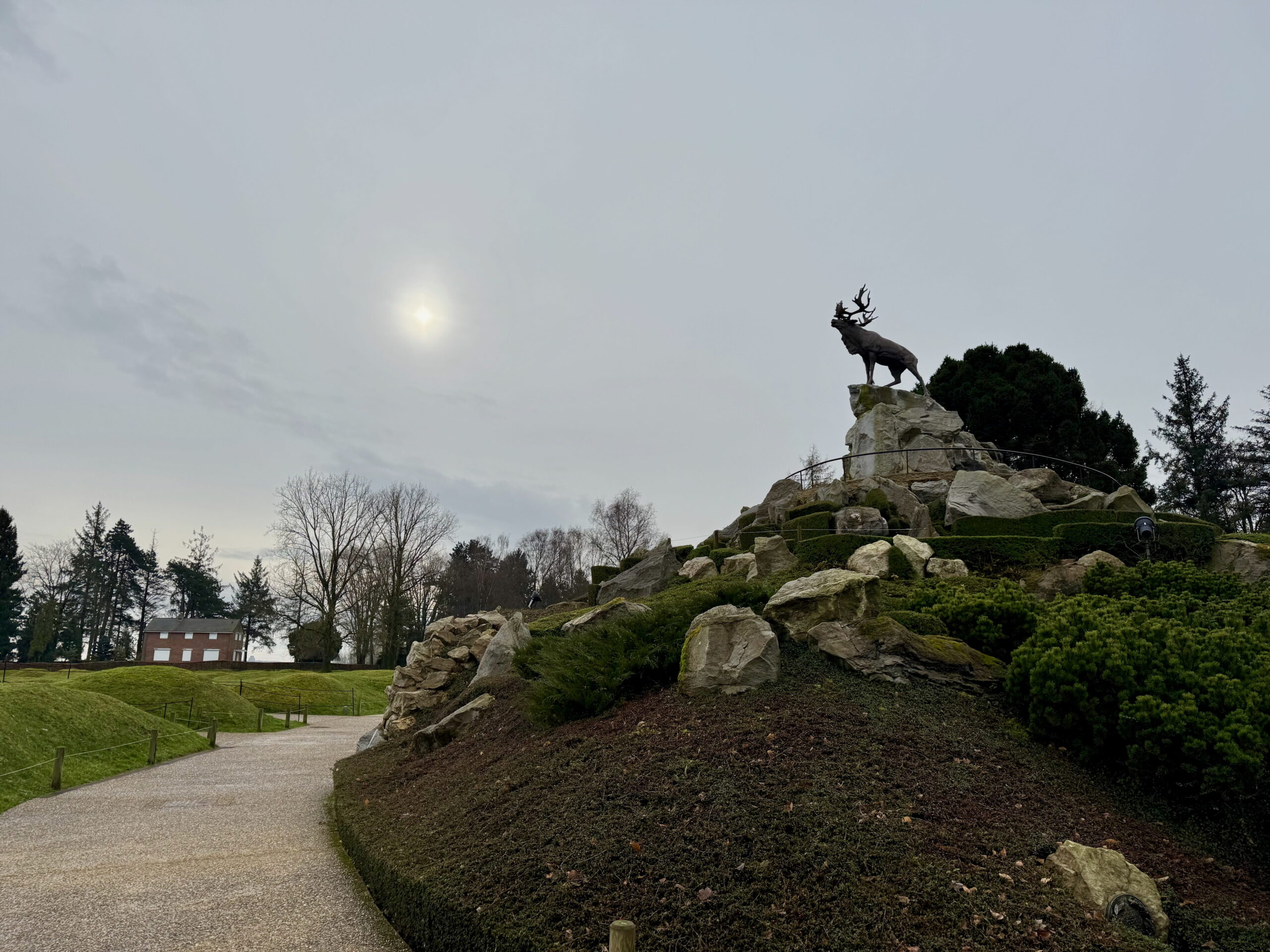
Beaumont-Hamel
The Newfoundland Memorial Park preserves the best-known surviving trench landscape on the Somme. The Royal Newfoundland Regiment attacked there on 1 July 1916 after the earlier British assault in the sector had failed.
The preserved ground allows visitors to see the distance, slope and German positions rather than imagine them from a map.
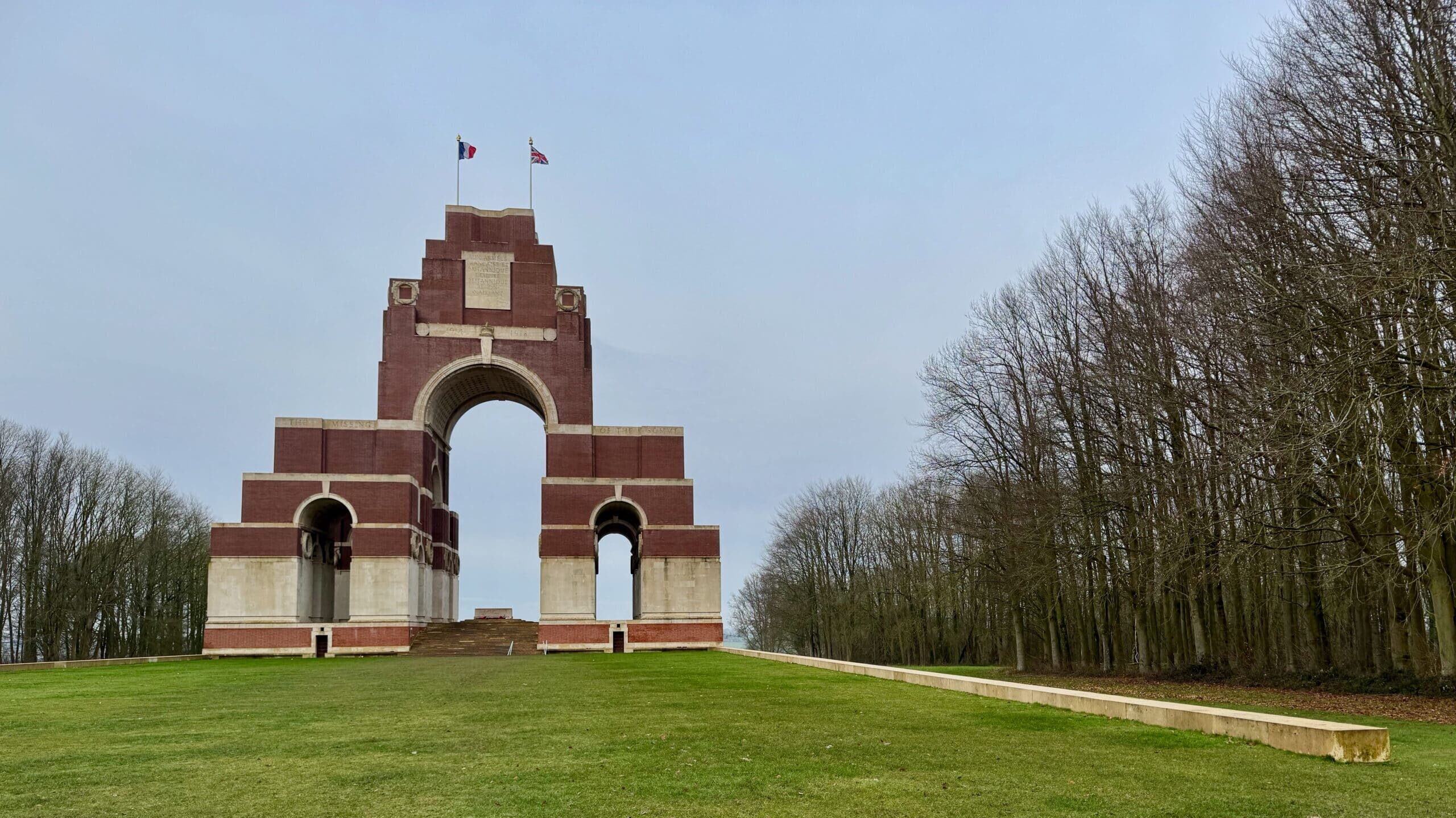
Thiepval
The Thiepval Memorial stands on the high ground where German defences resisted on 1 July. More than 72,000 British and South African missing are commemorated there.
It is both a memorial and a battlefield viewpoint, making it one of the most important stops for explaining why the northern attack failed.
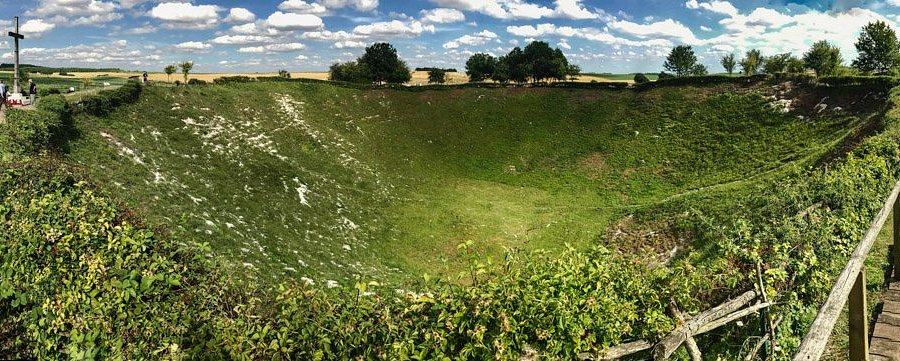
Lochnagar and La Boisselle
Lochnagar Crater shows the underground preparation for the offensive. At 7:28 a.m. on 1 July a 60,000-pound ammonal charge exploded beneath the German line.
The crater makes mine warfare visible but also illustrates its limits: a spectacular local explosion could not destroy the whole defensive system.
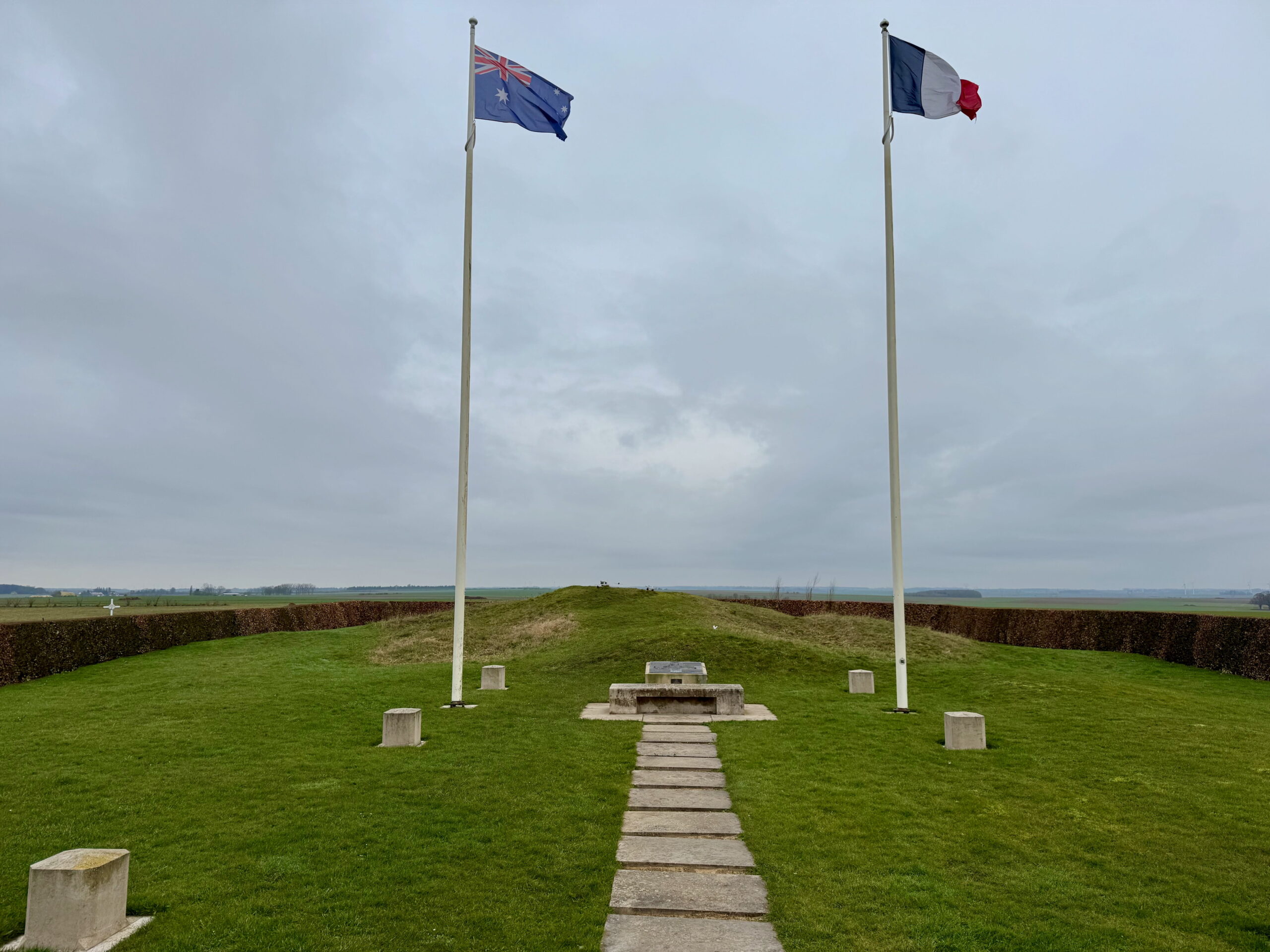
Pozières
Australian troops captured Pozières in July and then endured one of the most intense artillery battles in Australian military history. Around 23,000 Australian casualties were suffered during the Pozières and Mouquet Farm fighting.
The Windmill Site makes most sense when the ridge is explained first. Observation, not the ruined village alone, made this ground so valuable.
Adding Vimy Ridge
Vimy lies in the Arras sector and belongs to a different campaign in April 1917. It can be included when it is a priority, especially for Canadian visitors, but doing so reduces the time available on the Somme.
A dedicated Canadian day normally gives Vimy, Hill 70 and the Arras sector more depth.
Adding Villers-Bretonneux
Villers-Bretonneux lies far south-east of the core first-day Somme area. It is central to Australian remembrance and the fighting of 1918, not the opening attack of 1916.
It works best on an Australian-focused route or as part of a second Northern France day.
Family-history itineraries
A personal route should not be forced through the standard famous stops. If a relative fought at Courcelette, Bullecourt, Arras, Cambrai or another sector, the day is built around that evidence.
The grave or memorial can then be connected with the unit's operational ground rather than treated as the only destination.
Cancellation policy
Cancellation is free up to 7 days before the tour. This policy is stated directly on the tour page so the booking conditions are clear before you reserve.
How to choose between a Somme day and a Vimy day
The Somme and Vimy answer different historical questions. The Somme is best for understanding the scale of the 1916 offensive, the catastrophe of 1 July, Newfoundland at Beaumont-Hamel, the missing at Thiepval and the Australian experience at Pozières. Vimy is better for a focused Canadian story and the development of artillery and infantry planning in 1917.
If both matter equally, two separate days are the better choice. Combining them is possible, but it creates a route where the vehicle starts to dominate the experience.
How much time should be spent at each stop?
A major site such as Beaumont-Hamel or Vimy deserves at least forty-five minutes and often much more. Thiepval can easily take an hour when a memorial name, visitor centre and battlefield orientation are included. Smaller stops such as Lochnagar can be shorter, but they still need enough time for the terrain to be explained.
These timings are why a route with four or five meaningful stops can be fuller than a route with ten quick photographs.
For visitors new to the First World War
No prior knowledge is required. The day can start with basic orientation: who was fighting, where the front ran, what a trench system was and why artillery dominated the battlefield. Technical terms are introduced only when they help explain what can be seen.
For experienced visitors, the same route can go much deeper into battalion movements, artillery planning, trench maps and individual records.
For younger visitors and families
The battlefield works well for younger history enthusiasts when the day uses visible evidence rather than long lectures. Preserved trenches, mine craters, maps and individual stories create natural breaks in the explanation.
The route can also avoid overly dense cemetery stops if children are travelling, while still treating the sites with respect.
How historical accuracy is handled
Battlefield stories are checked against official histories, war diaries, cemetery records and current memorial information where possible. Popular anecdotes are not repeated simply because they sound dramatic.
Where the evidence is uncertain, the uncertainty is explained. This is especially important with casualty totals, exact locations of individual deaths and stories that developed long after the war.
Weather and seasonal differences
The Somme can feel completely different in summer and winter. High crops can hide ground contours and some smaller viewpoints. Winter gives clearer sightlines but can bring mud, wind and short daylight hours.
The route can be adapted accordingly. A good battlefield day uses the conditions rather than pretending every stop works equally well in every season.
Booking and cancellation
The current price and available dates are shown through the live booking process rather than fixed permanently in the historical copy. This keeps the page accurate when seasonal rates change.
Cancellation is free up to 7 days before the tour. That rule should remain visible on the tour page and in the booking flow so guests do not have to search for it elsewhere.
What changes when the tour is based on a family story?
A family-history day often changes the balance completely. A cemetery that would normally be a short stop may become the emotional centre of the itinerary, while a famous memorial can be shortened or removed. That is one of the main advantages of the private format. The route can follow the actual unit history and battlefield geography instead of forcing a personal story into a standard sightseeing sequence.
Frequently asked questions
What is the cancellation policy?
Cancellation is free up to 7 days before the tour.
Is the Somme tour private?
Yes. Your group does not join other participants.
How many guests can join?
The tour is designed for private groups of up to six guests.
Can Vimy Ridge be included?
Yes, but Vimy is in the Arras sector and including it reduces time on the Somme.
Can the tour trace a relative?
Yes. A full name, service number, battalion and date are the best starting points.
Can a museum be included?
Yes, but museum time should be planned deliberately so the battlefield itself is not rushed.
Where can the tour start?
Bruges and Ypres are the main pickup points, with custom pickup possible on request.
Book Your Private Somme & Northern France Tour
Choose the historical focus that matters most to your group and check current availability on the booking page.
Free cancellation up to 7 days before the tour.
Check AvailabilityWritten by Niels Declercq, private WW1 battlefield guide based in Bruges.