
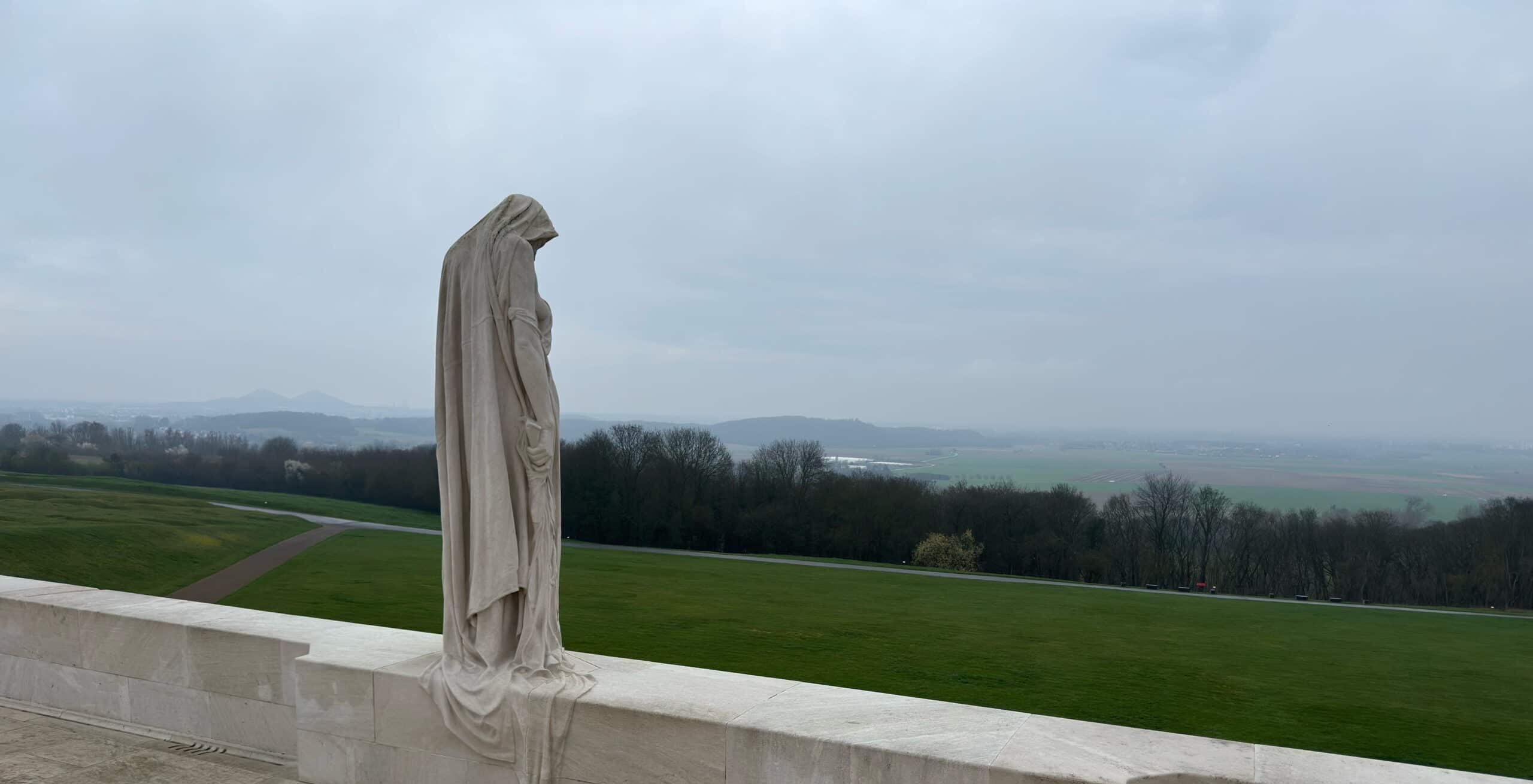
Vimy Ridge Memorial
The Canadian National Vimy Memorial stands on the heights of Vimy Ridge in northern France. It commemorates the more than 11,000 Canadian soldiers who died in France during the First World War and have no known grave. The monument also symbolizes the sacrifice of all Canadians who served during the war.
Vimy Ridge was the scene of one of the most important battles for Canada. Between 9 and 12 April 1917, during the Battle of Arras, the four divisions of the Canadian Corps attacked the heavily fortified German positions along the ridge. After careful planning, detailed maps, and weeks of preparation, the Canadians captured the ridge in a coordinated assault. It was the first time all four Canadian divisions fought together as one force.
The memorial itself was designed by Canadian sculptor Walter Seymour Allward and unveiled in 1936. Two towering pylons rise high above the ridge and can be seen from miles away. Around the base are sculptures representing peace, justice, sacrifice, and mourning. One of the most striking figures is “Canada Bereft”, a grieving figure overlooking the former battlefield.
Today the memorial stands within a preserved battlefield park maintained by Canada. Visitors can still see trenches, tunnels, and shell craters across the landscape. The site remains one of the most powerful memorials of the First World War and a lasting symbol of Canada’s sacrifice and national identity.