Private Custom WW1 Battlefield Tour
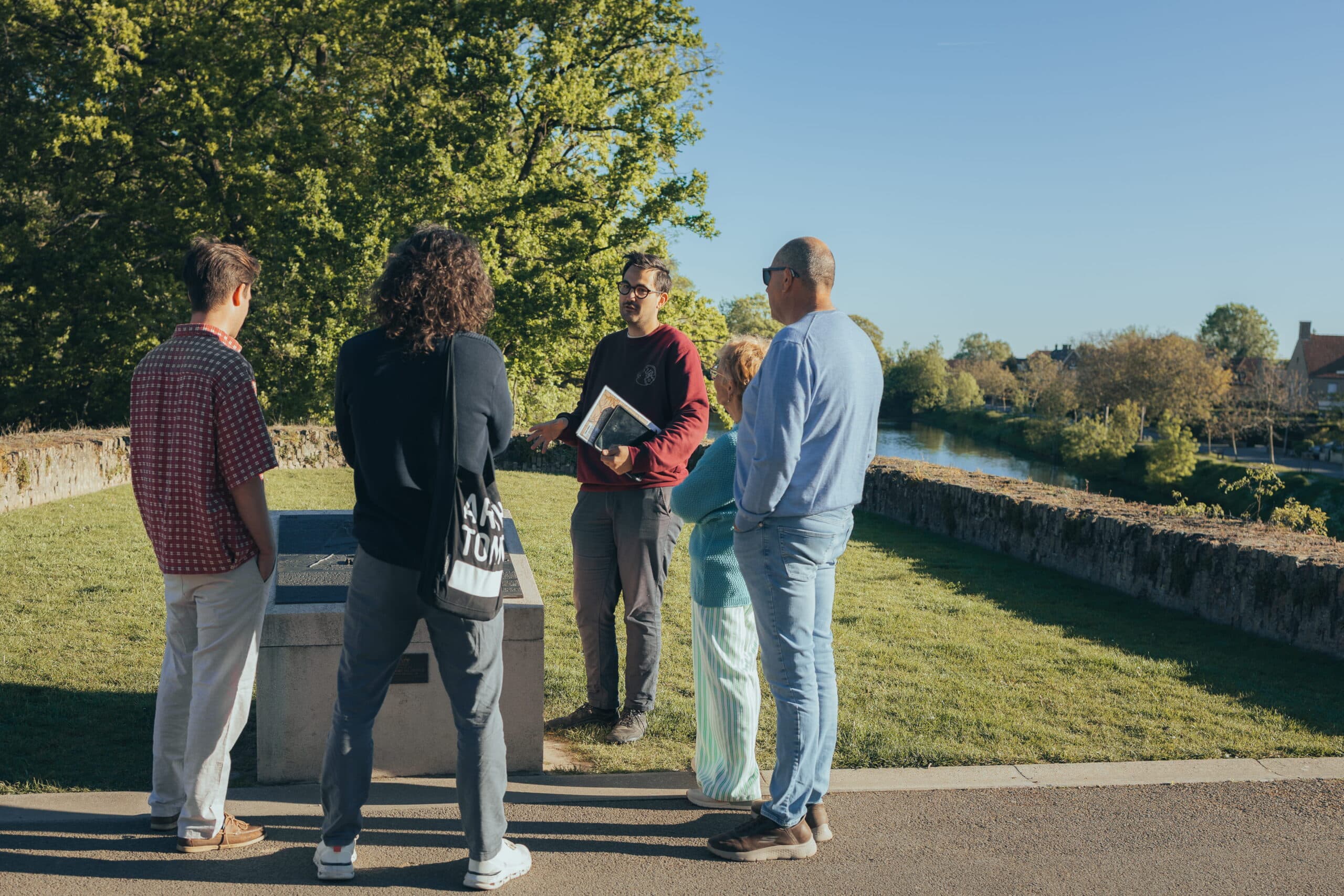
A Custom Battlefield Tour is a private First World War journey built around the history that matters to you. Instead of following a fixed list of famous sites, the route is designed around a relative, regiment, battalion, nationality, battle, cemetery, memorial, airfield, trench line or another personal connection to the Western Front.
For some guests, that begins with a complete service record. For others, it begins with only a name, a family photograph or a story that has been passed down for generations. The aim is the same: turn that starting point into a historically grounded route through the actual landscape of Flanders Fields, Ypres, the Somme, Arras, Vimy Ridge or the wider Western Front.
- Format: Private custom battlefield tour
- Group: Up to 6 guests
- Standard pickup: Bruges or Ypres
- Other pickup: Possible when the route and timing make sense
- Possible focus: Family history, regiment, battle, national story, aviation, medical services, logistics or remembrance
- Price: Quoted according to route, duration and research requirements
- Best principle: Build the day around the strongest historical connection, not the maximum number of stops
Follow the footsteps of a relative on the Western Front
Many custom tours begin with one person. A grandfather who served at Passchendaele. A great-uncle whose name appears on the Menin Gate. An Australian soldier buried near Polygon Wood. A Canadian who fought at Vimy Ridge. A Newfoundland soldier remembered at Beaumont-Hamel. A pilot whose squadron operated from an aerodrome in northern France.
The first task is to establish what can actually be documented. A service number, battalion, date of death, wound, decoration or transfer can make the difference between a general battlefield visit and a route that follows a specific unit through a specific piece of ground.
Where the surviving records allow it, the tour can connect the family story to trenches, objectives, roads, casualty clearing stations, cemeteries, memorial panels and the ground occupied by the unit. Where the evidence is uncertain, that uncertainty is explained rather than replaced by a dramatic guess.
What research can be used before the tour?
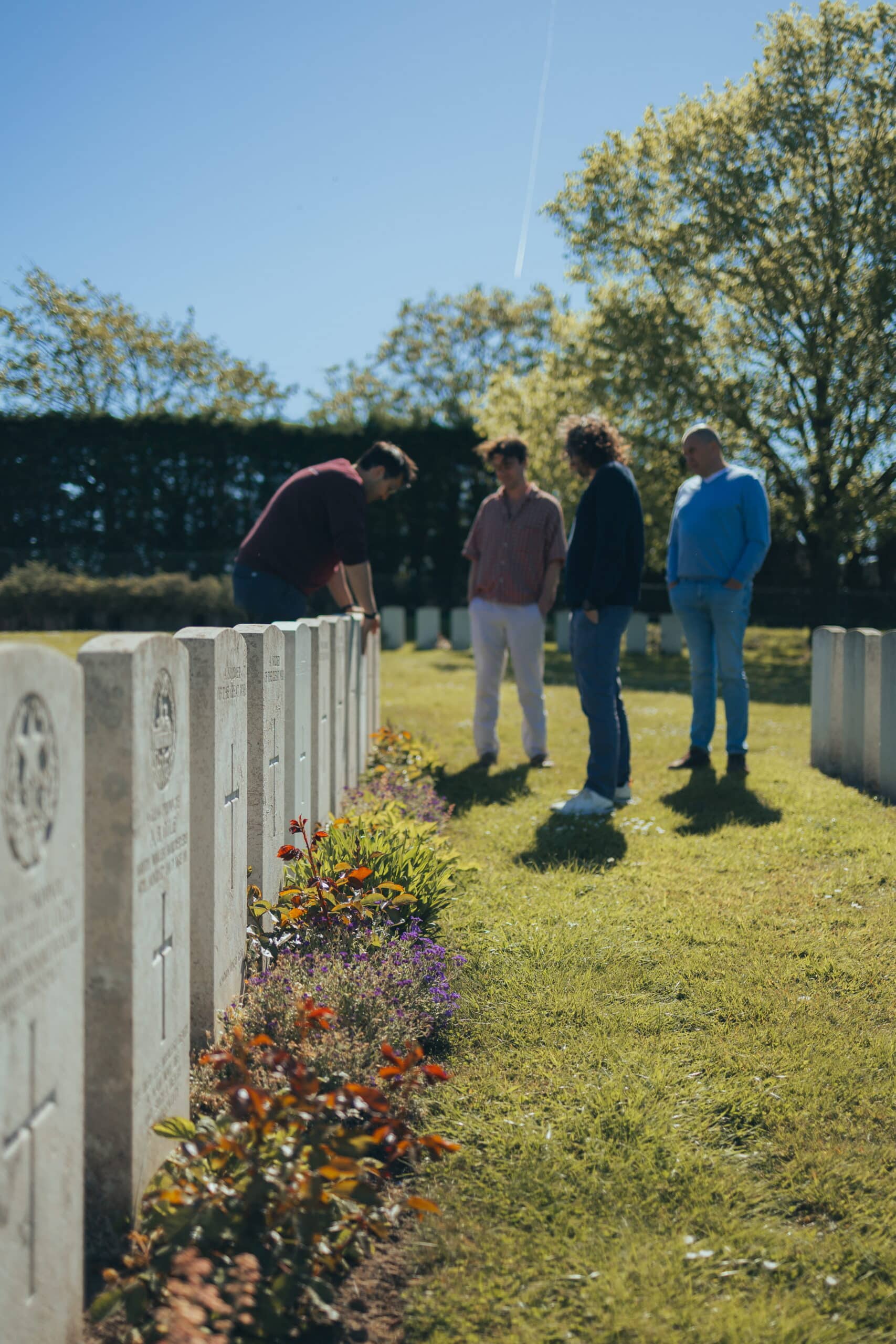
A strong custom tour normally combines several types of evidence. Commonwealth War Graves Commission records can confirm a grave or memorial reference. Service files can show enlistment, transfers, wounds and personal details. Battalion or unit war diaries explain where a formation was operating. Trench maps help translate wartime grid references into modern geography. Regimental histories, casualty lists, medical records, photographs and family letters can add further context.
Not every person leaves the same documentary trail. Officers may be named frequently in unit records while ordinary soldiers appear only in casualty lists or service files. A man commemorated as missing may have no recoverable exact place of death even when his battalion's position is known. The research is therefore used to define what is proven, what is strongly inferred and what remains unknown.
What if you only have a name?
A name can be enough to begin, especially when combined with nationality, approximate age, home town or family relationship. If you know a service number, regiment, battalion, squadron or date, include it. If you have photographs, letters, medal cards, service papers or old family notes, send them as well.
The earlier the information arrives, the more useful the route can become. A name sent on the morning of the tour may lead to a cemetery. A name researched beforehand may lead to the battalion ground, the medical route, the original burial place or a sequence of locations that explains the person's entire wartime experience.
A custom tour does not always mean family history
Personalisation can also be thematic. Some guests want to study one battle in depth. Others are interested in the Royal Flying Corps, artillery, tunnelling, military medicine, tanks, logistics, colonial troops, the Canadian Corps, the Australian Imperial Force or the German side of the Ypres Salient.
A custom day can therefore be designed for an experienced military-history visitor just as easily as for a family tracing an ancestor. The important point is that the day has one coherent historical purpose.
Possible custom routes in Flanders Fields
The Ypres Salient contains an unusually dense concentration of battlefield sites. A custom Flanders route might connect a relative's unit with Hill 60, Caterpillar Crater, Sanctuary Wood, Polygon Wood, Broodseinde, Passchendaele, Tyne Cot, Essex Farm, Saint-Julien, Langemark, Messines or one of the hundreds of smaller cemeteries and battlefield locations around Ypres.
If the family connection is to a missing soldier, the Menin Gate or Tyne Cot Memorial can be combined with the ground where the battalion fought. If the person died after evacuation, the route may instead follow the medical chain from battlefield to dressing station or casualty clearing station.

Australian family-history and battlefield routes
Australian custom tours can follow service from the Ypres Salient into northern France. In Flanders, Polygon Wood, Broodseinde, Passchendaele, Tyne Cot and nearby cemeteries may be central. In France, Pozières, Mouquet Farm, Bullecourt, Villers-Bretonneux, Fromelles and Le Hamel open different chapters of the Australian Imperial Force story.
For a family route, famous national memorials are not automatically the priority. If a relative fought in a less visited sector, the day should follow the evidence rather than force the person into the standard Australian itinerary.

Canadian custom battlefield routes
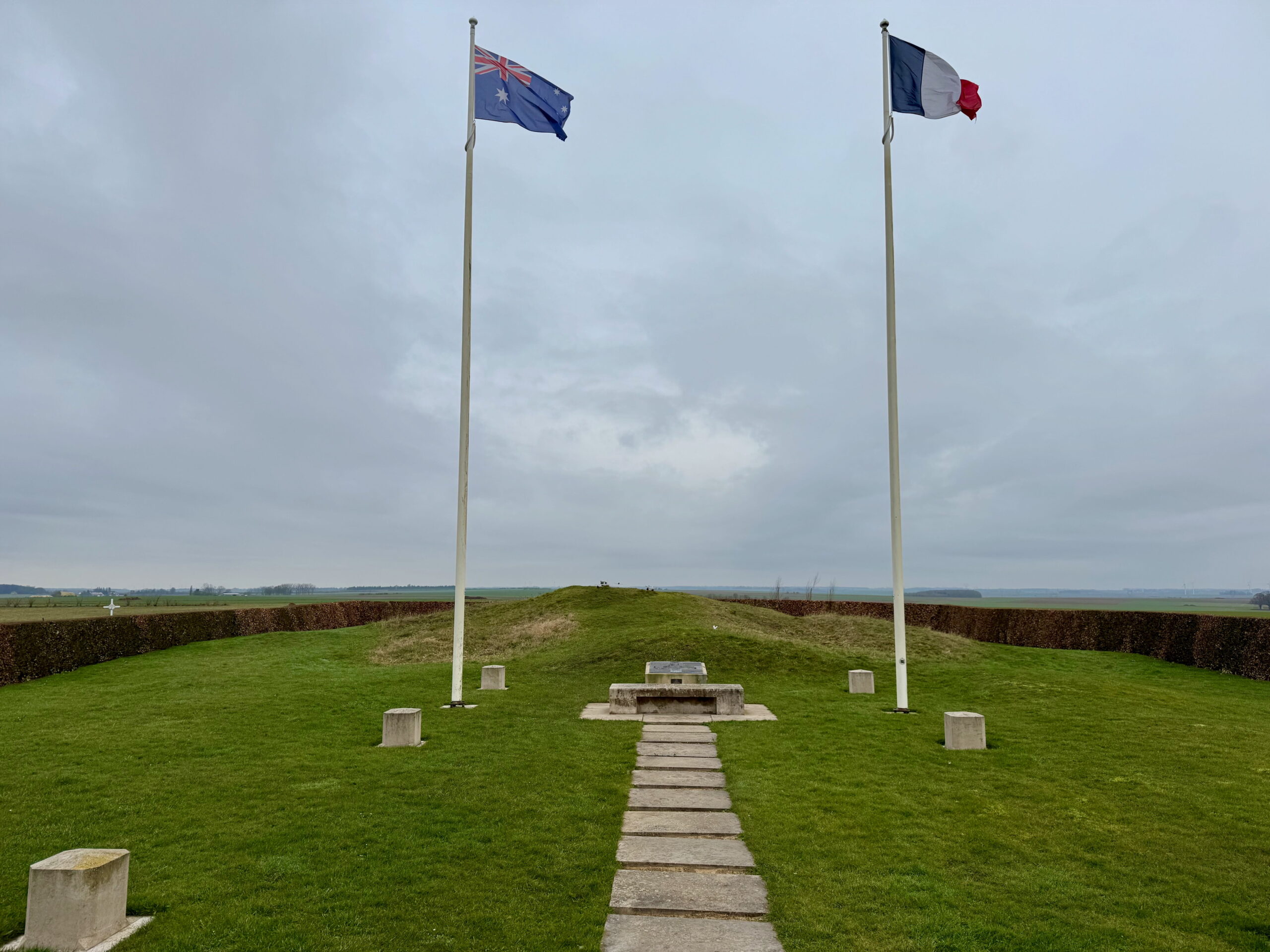
Canadian visitors may want to connect Ypres with Vimy Ridge, Hill 70, the Somme or the Hundred Days. The strongest route depends on the unit and date. A soldier of the 1st Canadian Division in April 1915 belongs first to the story of Second Ypres. A man killed in April 1917 may lead to Vimy. A soldier lost in 1918 may require an entirely different route.
Canada's Western Front story is too large to compress into one standard checklist. A custom tour allows the family or unit history to decide which sites deserve the time.
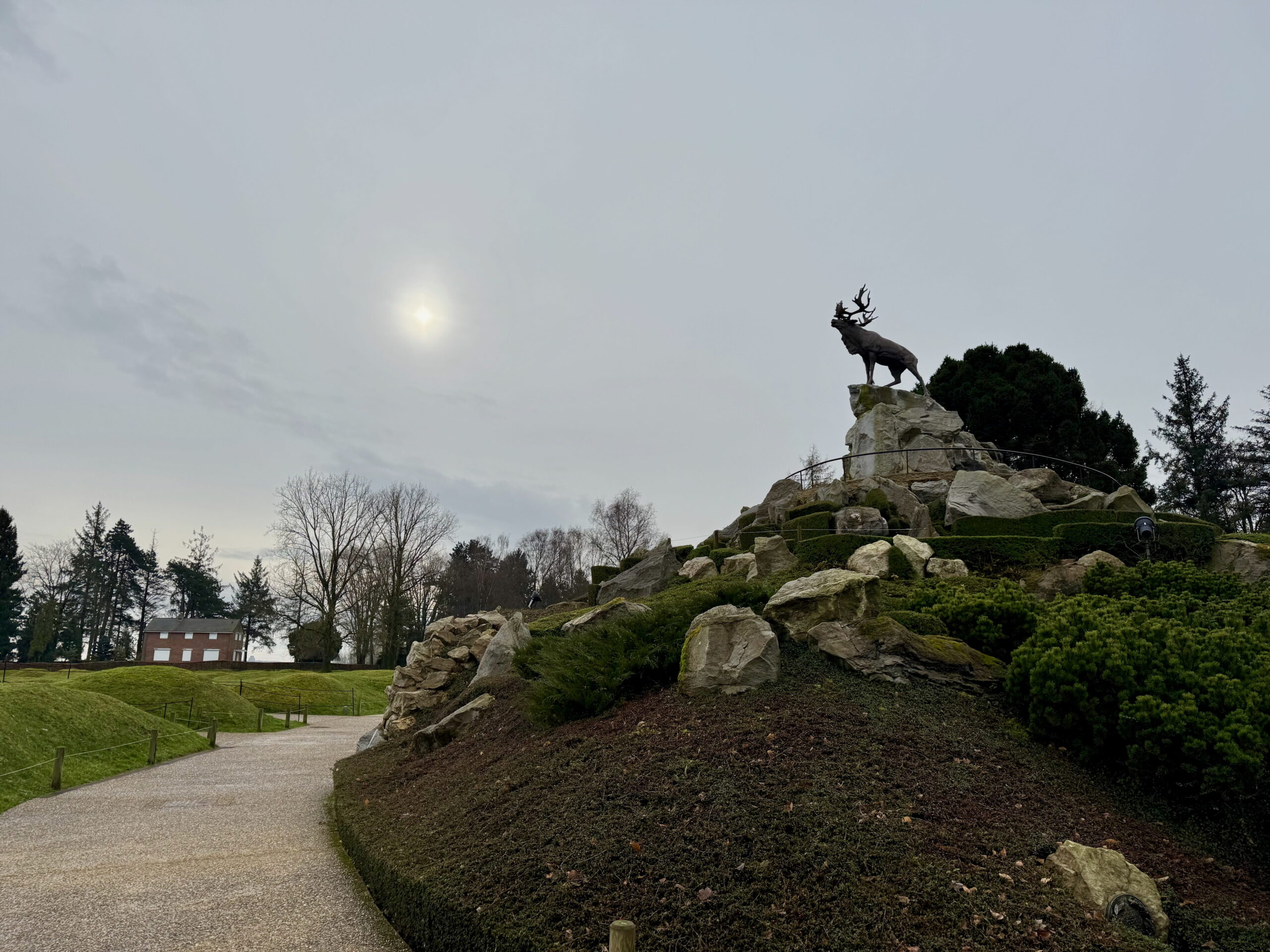
Newfoundland and the Trail of the Caribou
Newfoundland was a separate Dominion during the First World War, and its remembrance story deserves to be treated distinctly. Beaumont-Hamel is the best-known site, but the wider Caribou Trail also includes Gueudecourt, Monchy-le-Preux, Masnières and Courtrai.
A custom Newfoundland route can focus on one relative or follow the regiment through several campaigns depending on the time available.
British regimental and battalion tours
For British family history, identifying the battalion is especially important. One regiment could contain regular, territorial and service battalions operating in different sectors at the same time. A regimental name alone may therefore be too broad to locate a person accurately.
Once the battalion and date are known, a custom route can follow the unit through Ypres, the Somme, Arras, Cambrai or later offensives. Small cemeteries, village edges and ordinary farm roads often become more important than the famous monuments because they are closer to the documented unit ground.
Royal Flying Corps and First World War aviation tours
Aviation requires a different kind of battlefield research. Airfields could move, squadron records use different terminology from infantry war diaries, and an aerial combat could cover a large area. A family connection to a pilot, observer, mechanic or squadron may therefore involve aerodrome locations, memorials to missing airmen, crash areas and surviving records from both Allied and German units.
These tours work particularly well when guests already have a squadron, pilot or date to follow. The Arras sector, Flanders airfields and the wider northern French front all contain strong aviation stories.
Medical, logistics and behind-the-front themes
Not every wartime story belongs in a front-line trench. Doctors, nurses, stretcher bearers, railway troops, engineers, labour units, transport drivers and veterinary personnel all served within the same military system.
A custom route can connect Essex Farm with Lijssenthoek, or follow the transport network from Poperinge toward Ypres. It can examine Chinese Labour Corps graves, casualty clearing stations or the roads that supplied Passchendaele. These themes often reveal parts of the war that standard sightseeing routes barely touch.
How the route is built
Send the starting information
Share the name, service number, unit, date, documents and the places or themes that matter most to you.
Research the strongest connections
The available records are used to identify the most defensible battlefield locations and the wider military context.
Design a realistic route
Sites are grouped geographically so the day spends more time on the battlefield and less time crossing the same roads repeatedly.
Receive the proposal
The final route, duration and quote reflect the places involved and the research or travel required.
Visit the ground
Maps, photographs and records are used on location to connect the documentary story with the modern landscape.
Adapt when needed
Because the tour is private, time can be shifted toward a grave, memorial, museum or piece of ground that becomes especially important during the day.
Why geography matters when planning a custom day
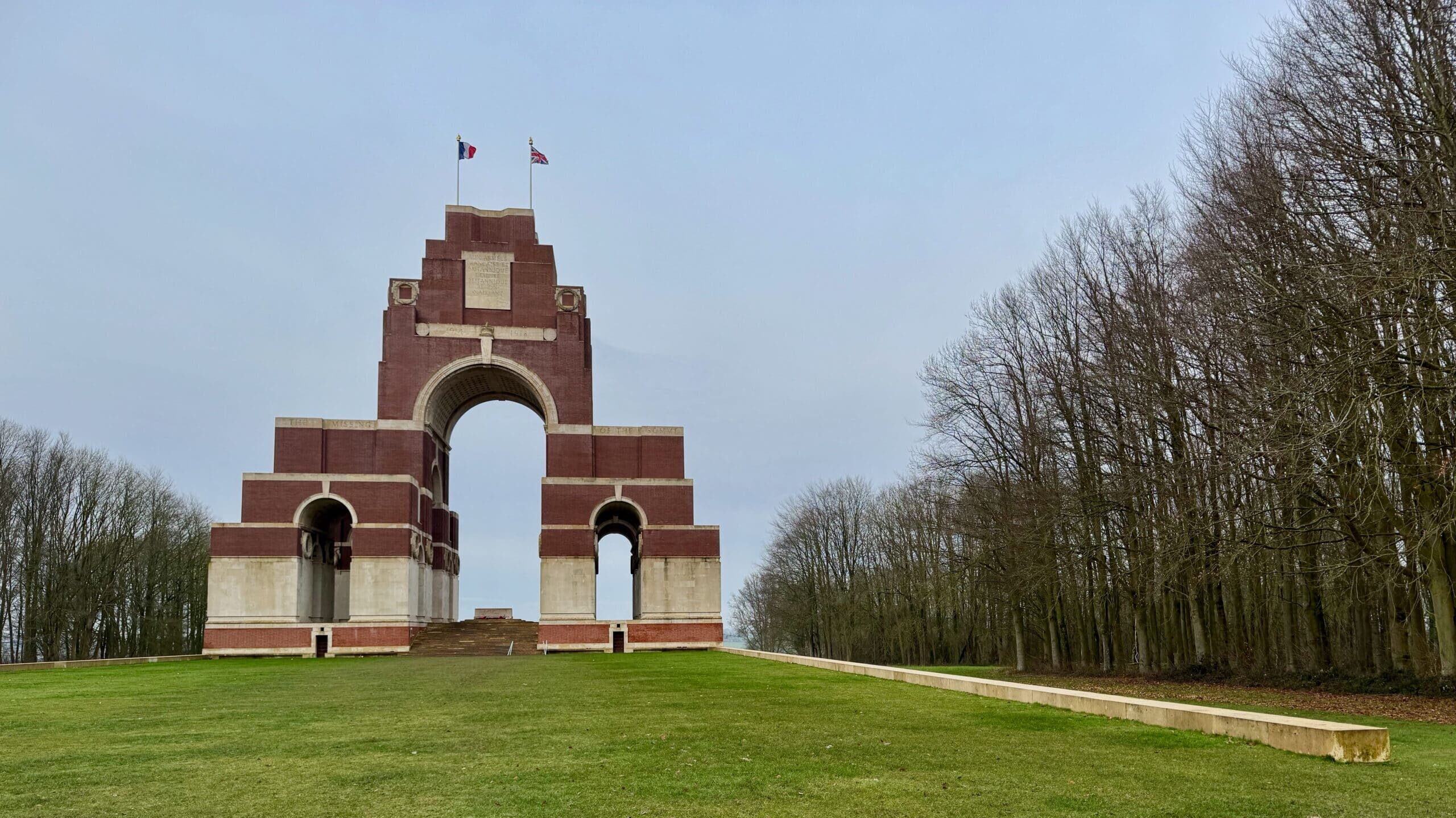
Ypres, Vimy Ridge, Beaumont-Hamel, Pozières, Bullecourt and Villers-Bretonneux may all belong to the Western Front, but they do not belong to one compact visitor area. Northern France covers substantial distances. A route that looks simple on a map can become dominated by driving if too many distant sectors are combined.
The best custom itinerary therefore follows a geographic and historical line. If a family member served in several sectors, it may be better to choose the most important day of service or divide the story across two days rather than rush through every location.
Can a custom tour include the Somme and Ypres?
Yes, but route design matters. Ypres and the central Somme are far enough apart that combining both in one day reduces the depth available at each. If your relative served in both areas, a two-day plan often gives a much stronger result.
For a one-day tour, the route should normally prioritize the sector with the strongest family or historical connection.
What happens when there is no exact battlefield location?
This is common. A service file may confirm the battalion and date but not the precise shell hole, trench bay or point where a man was hit. War diaries may give a battalion frontage rather than individual positions. Missing soldiers can be even harder to place.
A careful custom tour does not turn a broad battalion area into a false exact spot. Instead, it explains the strongest known position, the unit's objective, the surrounding terrain and the limits of the evidence. In many cases, standing on the correct battalion ground is more meaningful than being given a dramatic but unsupported claim.
Graves, memorials and original burial places
Where a known grave exists, cemetery records can sometimes reveal an original battlefield burial or a later concentration from a smaller cemetery. Where there is no known grave, memorial records identify where the person is commemorated.
The most meaningful sequence is often to visit the battlefield first and the grave or memorial afterwards. That way, the headstone or name is no longer isolated from the events that led to it.
Maps, photographs and documents on the battlefield
Historical material is used as a tool, not as a replacement for the landscape. A trench map can show where the front ran. An aerial photograph can reveal a vanished trench system. A family portrait can return a face to the name being followed. A war-diary entry can explain why a battalion moved across the field in front of you.
The strongest moment is often when those sources line up with the modern ground and a place that looked ordinary suddenly becomes legible.
How much research is included?
The amount of preparation depends on the request. A straightforward cemetery visit with an identified grave requires less research than reconstructing the movements of a battalion across several days or testing competing locations for an aviation event.
The proposal will reflect the route and research needs. If a request requires deeper archival work beyond normal tour preparation, that can be discussed before the booking is confirmed.
What should you send before the tour?
- Full name of the person you are tracing
- Service number if known
- Regiment, battalion, squadron or unit
- Date of death, wounding, decoration or known action
- Cemetery or memorial reference
- Family photographs, letters or service documents
- Any previous research or family story you want checked
- Your preferred travel date and pickup location
- The number of people travelling
- Any sites you definitely want included
Pickup, timing and practical planning
Bruges and Ypres are the standard pickup points. Other starting or finishing locations can be arranged when they fit the route. For Northern France, staying around Arras or the Somme can sometimes give substantially more battlefield time than driving from Belgium both ways.
Custom routes are normally full-day experiences because research-based visits need time on the ground. Driving, parking, cemetery searches, battlefield orientation and family-history stops all take longer than a standard sightseeing schedule suggests.
Museums on a custom tour
Museums can be included when they genuinely strengthen the story. For a first-time Flanders visitor, the Passchendaele Museum or Hooge Crater can add useful trench and dugout context. On the Somme or around Arras, another museum may fit the chosen theme.
The priority remains the battlefield itself. Spending several hours indoors can be worthwhile, but it should be a deliberate choice rather than something automatically inserted into every route.
Can the Last Post be added?
For tours finishing in the Ypres area, the Last Post beneath the Menin Gate can form a powerful conclusion to the day. Whether it makes practical sense depends on the route, pickup point and finishing time.
If the Menin Gate is directly connected to your family story, the ceremony can carry additional meaning after the battlefield and memorial panel have already been explained.
What makes a good custom battlefield tour?
A good custom tour should answer more than “where is the grave?” By the end of the day, you should understand where the person or unit fits within the larger campaign, what the ground meant militarily, what can and cannot be proven, and why the cemetery or memorial is located where it is.
The value is not measured by the number of stops. It is measured by whether the story makes sense when you stand on the ground.
Previous custom-tour stories
Some of the most meaningful custom days have led to the Stories of Remembrance section of this website: families returning to Polygon Wood, descendants following Billy Bishop's aviation story, visitors finding a relative's name on the Menin Gate, and the family of Bertie Stevens retracing his final days in the Ypres Salient.
Those stories show what the custom format is designed to do: combine documentary research with the actual landscape and give one individual story the time it deserves. You can read them here.
Frequently asked questions
Is every custom battlefield tour private?
Yes. Your group has the guide, vehicle, route and pace to itself.
How many guests can join?
Custom tours are designed for private groups of up to six guests.
Can you research a relative before the tour?
Yes. Send the full name, service number, unit and any documents you already have. The amount of research required depends on the case.
Can you guarantee the exact place where a soldier died?
No. Sometimes the evidence is precise; sometimes it only supports a battalion area or objective. The tour will distinguish documented fact from inference.
Can the route combine Belgium and Northern France?
Yes, when the geography is realistic. For distant sectors, two days can be much stronger than one rushed day.
Can I follow a regiment instead of a family member?
Yes. Custom tours can focus on a battalion, regiment, division, squadron, battle or specialist theme.
Where can the tour start?
Bruges and Ypres are the standard pickup points. Other pickup or drop-off locations can be discussed according to the route.
What is the cancellation policy?
Cancellation is free up to 7 days before the tour.

Tell Me the Story You Want to Follow
Send your travel date, pickup location, group size and whatever family or military information you already have. You do not need to know the exact itinerary before contacting me.
Free cancellation up to 7 days before the tour.
Please contact me at info@visitflandersfields.com or via WhatsApp if you have questions about the route, research or pickup location.
Tour duration can fluctuate depending on traffic, battlefield access and the distance between locations.
Plan My Custom Battlefield Tour See Previous Remembrance StoriesWritten by Niels Declercq, private WW1 battlefield guide based in Bruges.