Understanding Passchendaele on a visit from Bruges
Passchendaele is often introduced through mud and casualty figures. Those are essential parts of the history, but they do not explain the whole campaign. The Third Battle of Ypres consisted of successive operations, changing tactics and contested ridges between July and November 1917.
Before choosing places to visit, establish the broader questions. What were the armies trying to achieve? Why did observation from relatively modest heights matter? How did infantry, artillery and supply depend on one another? The landscape becomes more meaningful when these questions guide the discussion.
In this article
Reading the campaign in phases
The opening attack on 31 July did not follow the same pattern as every later operation. The September battles, Broodseinde in early October, the failed attacks later that month and the Canadian operations each need their own context. Weather and ground conditions also changed.
Maps help make those differences visible. They show objectives and front lines, but they must be read alongside accounts of what units could actually do. A short distance on a map could represent a difficult advance through shell-damaged ground under fire.
The Canadian phase
The Canadian attacks began on 26 October. Further operations followed on 30 October and in November. Canadian troops captured Passchendaele village on 6 November, followed by another attack on 10 November. The village’s capture should not be described as the end of every operation that day.
This sequence matters when researching a person or unit. A casualty dated 30 October belongs to a different action from one dated 6 November. The broad campaign name is a starting point; the unit record supplies a more precise connection.
Cemeteries and the surviving ground
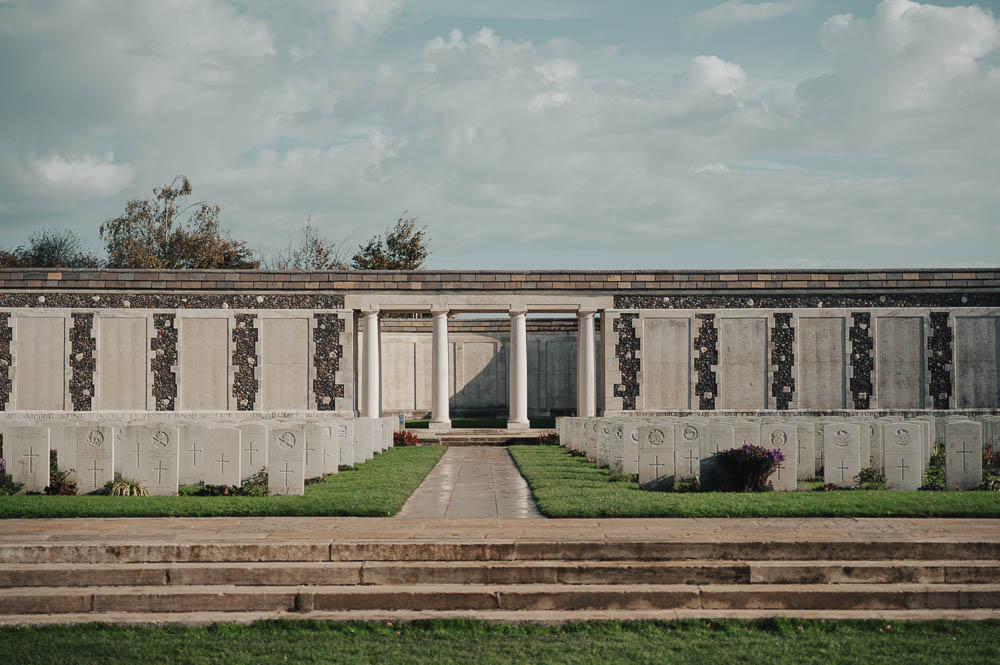
Polygon Wood, the ridges near Tyne Cot and the Passchendaele area offer different perspectives on the campaign. A cemetery is also evidence of burial and later concentration, so it should not be treated as a straightforward map of where every man died.
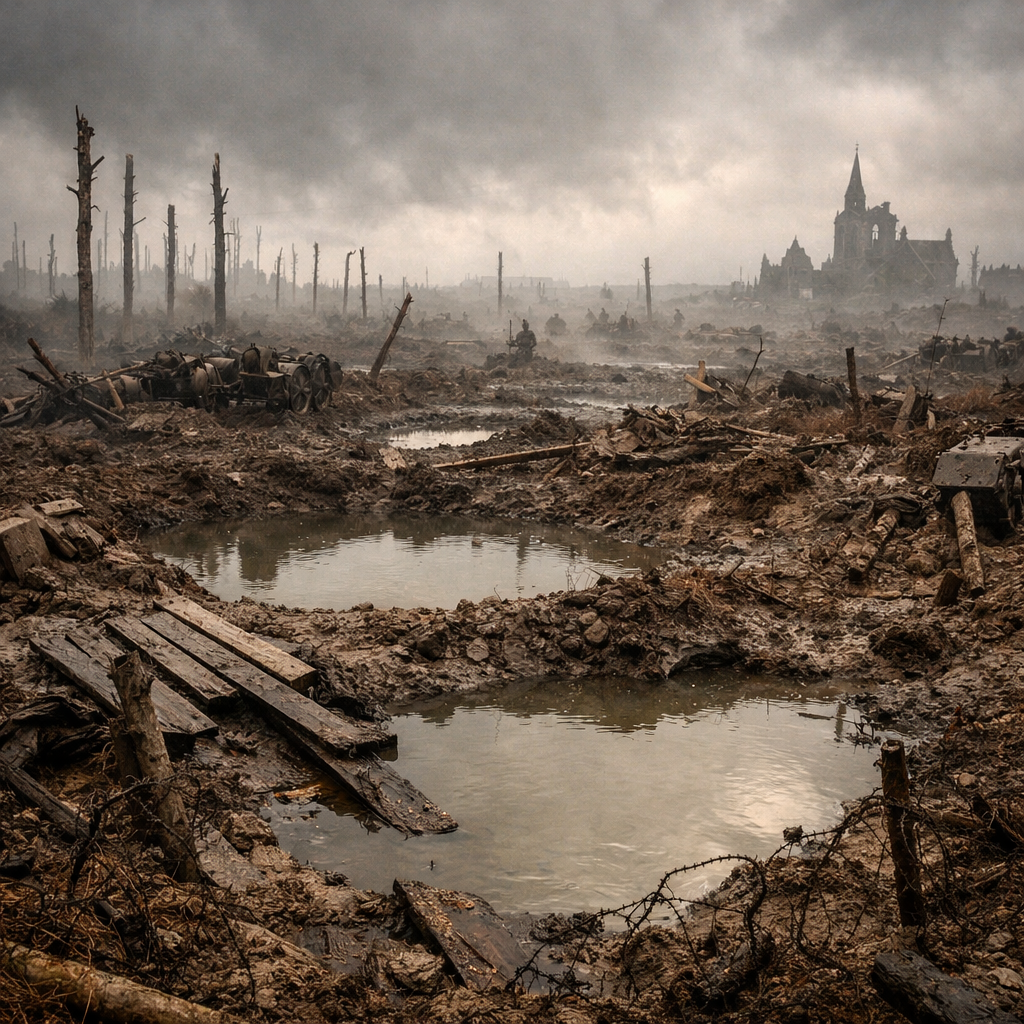
The rebuilt villages and regrown woods can make the wartime conditions hard to picture. Historical photographs help bridge that gap. They allow a visitor to compare a modern view with documented conditions without assuming that the landscape remains unchanged.
Choosing a useful focus
A visit from Bruges involves travel as well as time on the battlefield. Trying to include every named site leaves little room for explanation. A campaign overview, an Australian or Canadian connection, or a family story can each provide a coherent focus.
Tell me what draws you to Passchendaele before booking. I will discuss the historical subject, practical arrangements and the time available. Museum admission, lunch, mobility needs and any Last Post extension should be confirmed for the agreed visit rather than assumed from a general article.
Bring your questions to the battlefield.
Tell me your preferred date, group size, starting point and what you would like to understand. If you are following a relative, include the name and any service details you have.
I will explain what is possible, discuss any research needed and confirm the practical arrangements and group price before you book.
Prefer direct contact? Email Niels or ask on WhatsApp.
Lunch and drinks are separate. The Last Post is an optional evening extension agreed in advance.