From Graves
to the SkyThe Royal Flying Corps in the Ypres Salient
Discover the air war above Ypres through the lives of the men who fought it.
Above the trenches, pilots and observers were trying to understand a battlefield that was difficult to read from the ground. Their photographs, observations and signals helped shape the fighting below. This private tour explores that connection through the stories of airmen remembered in Flanders Fields.
Seasonal half-day rates apply. Your total is confirmed before booking.
What happened in the sky mattered on the ground.
A photograph. A map reference. A short signal to a battery. Information from the air became a weapon.
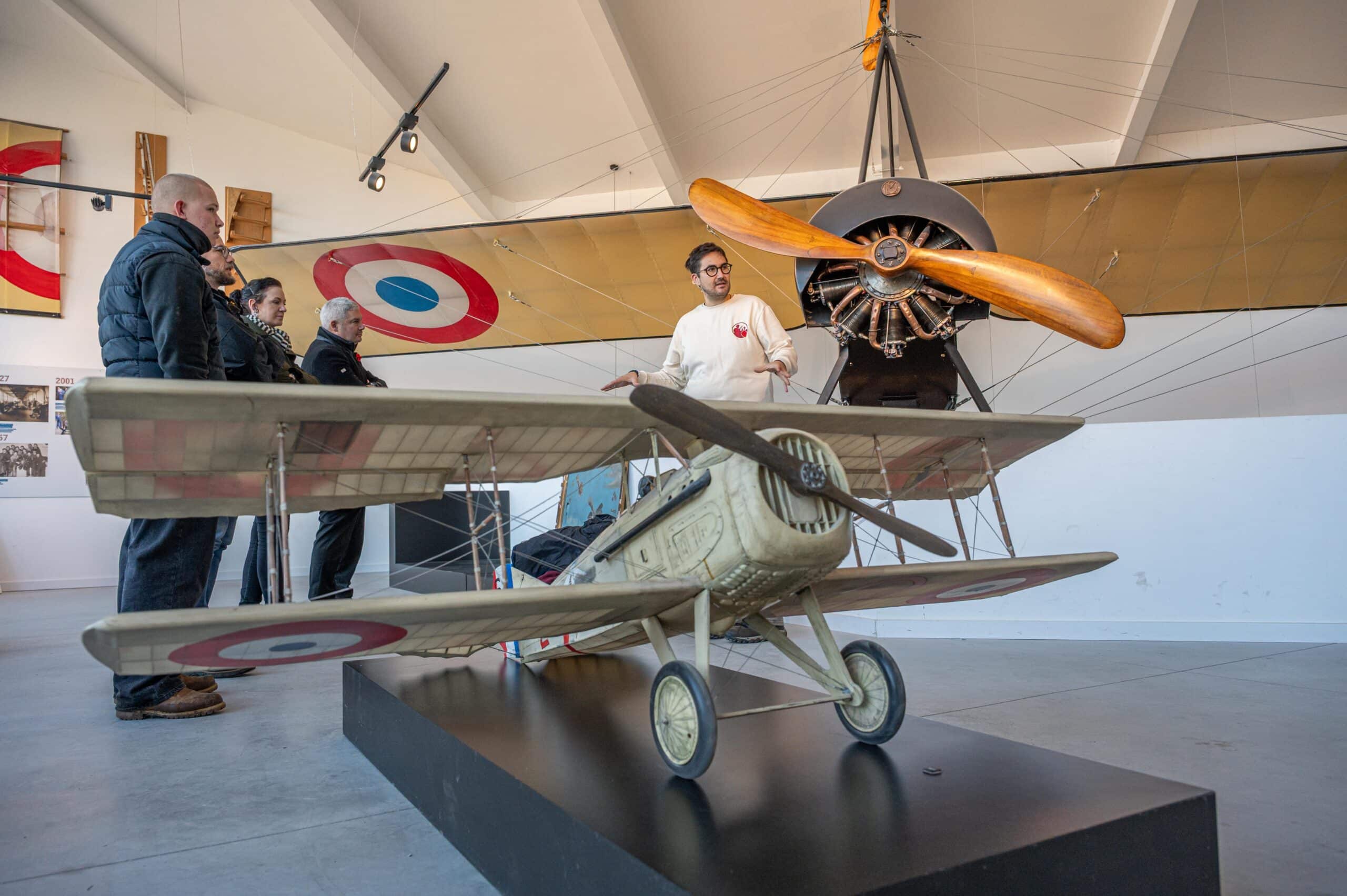
The Royal Flying Corps was part of the struggle to see and understand the enemy’s positions. Reconnaissance, aerial photography and artillery observation connected the aircraft above the Ypres Salient with the soldiers fighting in it. The value of an aircraft lay as much in the information it could bring back as in its ability to fight.
From Graves to the Sky explains why that work mattered, what it demanded of the crews and why control of the air became so fiercely contested. The focus is on the relationship between the air war and the ground war, told through individual lives.
Seeing, reporting and fighting.
Behind every aircraft was a task. Understanding that task changes the way we read the stories of the people who flew above Flanders.
Reading the battlefield
Wartime maps and photographs help explain what could be learned from above. The story connects an observer’s view with the need for useful information on the ground: recognising positions, making sense of the landscape and reporting what had been seen. It brings the work of reconnaissance into the wider history of the fighting around Ypres.
The observer and the guns
Artillery observation reveals how closely airmen and gun crews depended on one another. A battery could not always see where its shells landed. An observer above the target could help correct its fire. Maps, signals and the clock code explain how something seen from a cockpit could become information a battery could use.
The fight for the sky
The need to protect observation aircraft, and prevent the enemy from gathering the same information, helps explain the development of aerial combat. The tour places the reputations of fighter pilots alongside the less familiar work of reconnaissance crews. British, French and German perspectives connect the struggle for control of the sky with its human cost.
Beyond the aircraft, the lives.
A name on a headstone can open a much larger story. Who was this airman? What work was he doing? What can the surviving records tell us about his service, his loss and the people who remembered him?
The tour connects pilots and observers with the military tasks they carried out, while keeping the individual in view. Well-known flying reputations belong to the same history as men whose names are less familiar. Their stories raise questions about duty, danger, recognition and the ways the air war has been remembered.
The consequences of a mission also reached beyond the cockpit. Injury, medical care, loss and remembrance connect aviation history with the wider human experience of the First World War. Cemeteries and memorials give that history a presence in today’s landscape.
Records do not answer every question. Where evidence is incomplete or accounts disagree, I explain the uncertainty. Understanding what we can establish, and where the record falls silent, is part of understanding the people behind it.
A story shaped by research.
I am Niels Declercq, the guide behind Visit Flanders Fields. From Graves to the Sky grew from my final research project as a Westhoek regional guide, bringing together my research into airmen around Ypres and the work of explaining their stories in the landscape where they are remembered.
I use records, maps and photographs to connect military history with individual experience. You do not need specialist knowledge of aircraft to follow the story. An interest in the First World War, the people involved or the history of the Ypres Salient is enough.
If you have a family connection to an airman, let me know when you enquire. A name, squadron or surviving document may provide a personal connection with the history we discuss.
Discover another layer of Flanders Fields.
A private tour for up to six guests, from €450 including VAT. Allow approximately 4–5 hours from Ypres. Send your preferred date and interests; I will personally confirm availability, pickup arrangements and the seasonal group price.
Enquire about this tourTell me your preferred date, group size and interests.
Your RFC tour enquiry
Your enquiry comes directly to me. I will confirm availability and the total price before you book.
Prefer direct contact? Email Niels or ask on WhatsApp.
Please mention any mobility needs when you enquire. Tour terms and cancellation policy.
Your questions answered.
Do I need to know about WW1 aircraft?
No aviation expertise is needed. I explain the roles of the pilot and observer, and how reconnaissance, photography and artillery observation connected the air war with the fighting below.
Who is this tour for?
This tour is for visitors interested in First World War aviation, returning battlefield visitors looking for a deeper understanding of the Ypres Salient, and anyone with a personal or family connection to an airman.
Can you include a family connection?
Send me the name, squadron, service number and any records you have. I will assess how your family connection relates to the history covered by this tour and discuss the possibilities with you before booking.
What does the tour cost?
The tour starts from €450, including VAT, for your private group of up to six guests. Seasonal half-day rates apply. Allow approximately 4–5 hours from Ypres. I confirm availability, pickup arrangements and the total price before you book.