Published: 18 May 2026
Intro
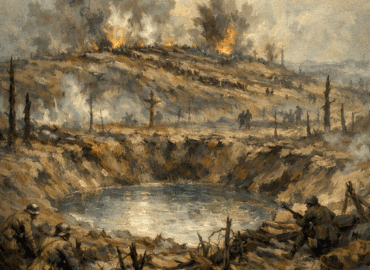
Visit Flanders Fields offers a private tour from Bruges that shows how the devastated city of Ypres rose from the ashes after the First World War. During four years of fighting the town was shelled from three sides and by 1918 houses, shops, municipal buildings, schools, the cathedral and the famous Cloth Hall lay in ruins. Some British politicians wanted to leave Ypres as a permanent memorial: in January 1919 Winston Churchill called the ruins “sacred ground”. However, the Belgian people chose to rebuild. This tour tells that story and lets you walk through a city that is both ancient and new.
From ruins to return
After the Armistice, Ypres was a wasteland. Refugees trickled back, but there was nowhere to live. In July 1919 the Belgian government offered subsidies and war damages to encourage inhabitants to return and build temporary housing. King Albert’s fund provided prefabricated wooden homes that were assembled at the Plaine d’Amour in the north‑west of the town. Many people expected to move out after a few years, but the housing shortage meant the prefabs were still occupied well into the 1920s. We will visit an example of one of these houses preserved at the Passchendaele Museum.
Architect Jules Coomans, who had been restoring Ypres before the war, returned to oversee the reconstruction. In 1920, a public meeting debated whether to build a modern city or recreate the medieval town. Supporters of the old style won and work began on rebuilding Ypres “exactly in its original image”. Within five years most private buildings were finished and by the early 1930s public buildings followed. The twin spires of St Martin’s Cathedral were restored, and by 1934 the western wing and belfry of the Cloth Hall were completed. Reconstruction of the eastern wing continued after Coomans’s death and the project was finally finished in 1967.
Sites to visit in a rebuilt city
Our reconstruction tour begins in the Grote Markt, where the rebuilt Cloth Hall houses the In Flanders Fields Museum. Here interactive exhibits explain how Ypres and the Westhoek region were rebuilt and how each village has its own reconstruction story. Nearby the Yper Museum explores the revival of social life and the role of architects like Huib Hoste. We then stroll to St Martin’s Cathedral, whose restored spire now points skyward, and pause at the Menin Gate (opened 1927) to hear about its role as both memorial and part of the rebuilt town. The tour continues along the Ramparts walk, where you can compare wartime photos with the peaceful gardens of today.
Our guide will also show you how reconstruction and tourism are linked. Today the Westhoek’s homogeneous appearance owes much to the picturesque architecture adopted after the war. We discuss how Ypres rebuilt its identity around remembrance, attracting war pilgrims who still come for the nightly Last Post ceremony. The resilience of the local population, supported by international aid, paved the way for the revival of communities.
Practical information
This full‑day tour departs from Bruges. You will explore Ypres on foot and by vehicle, with time for lunch in the Grote Markt. Comfortable shoes are essential. The tour runs year‑round, though spring and summer offer longer daylight. We can adapt the tour for wheelchair users on request.
Planning your visit
Ready to walk through a city reborn? Reserve your private reconstruction tour now via Visit Flanders Fields and see how Ypres emerged from devastation to become a living monument. For other tour options, see Flanders Battlefield Day Tours.
FAQs
Was Ypres really rebuilt exactly as it was?
Local leaders voted to reconstruct the medieval cityscape. While most buildings were replicated, some details changed—such as St Martin’s Cathedral’s spire, which gained a pointed top.
Is the Menin Gate part of the reconstruction?
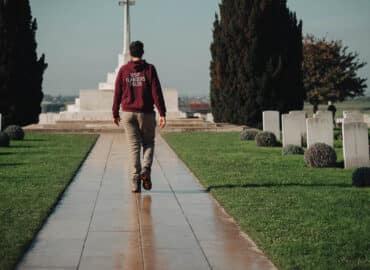
Yes. Completed in 1927, the Menin Gate Memorial forms a key element of post‑war Ypres and lists more than 54,000 missing soldiers. The Last Post has been sounded there every evening since 1928.