
History of the Third Battle of Ypres
The story of Passchendaele epitomises the horror of the Western Front. In July 1917 the Allies launched a massive offensive from the Ypres Salient to capture the German‑held ridge around the village of Passchendaele. The resulting Third Battle of Ypres was fought in driving rain across a shattered landscape. If you’re staying in Bruges and want to understand why this battle still symbolises futility and sacrifice, Visit Flanders Fields offers a private tour that brings you to key sites like the Memorial Museum Passchendaele 1917, Polygon Wood and Tyne Cot Cemetery. Here’s how to make the most of the trip.
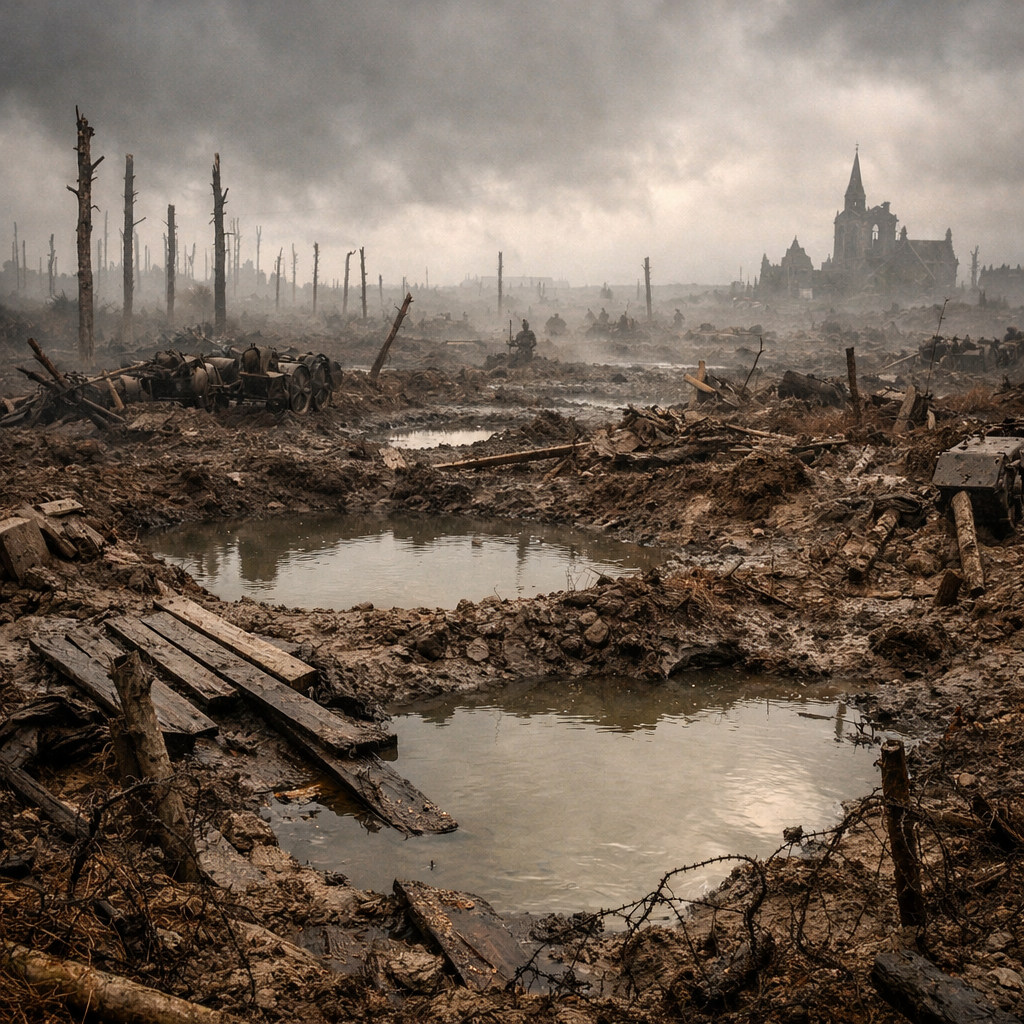
The British high command hoped a breakout in Flanders would force Germany to its knees. After two weeks of artillery bombardment, the attack began at 3.50 a.m. on 31 July 1917. Early advances on Pilckem Ridge were undone when torrential rain turned shell‑pocked fields into a quagmire; horses carrying ammunition could not reach guns and troops bogged down in mud. Over the next three months the offensive progressed in fits and starts. Australian and Canadian troops joined the struggle. Nine Canadian soldiers earned the Victoria Cross during the battle, but Canada paid dearly: more than 4,000 of its soldiers were killed and almost 12,000wounded. Overall, British forces suffered around 300,000 casualties while inflicting roughly 260,000 on the Germans.
Begin your tour at the Memorial Museum Passchendaele 1917 in Zonnebeke. Its exhibits and recreated dugouts explain how General Haig hoped to seize high ground and capture channel ports. Next, walk through **Polygon Wood to see preserved bunkers and memorials to the Australian 5th Division. A short drive away lies Tyne Cot Cemetery, the largest Commonwealth War Graves Commission cemetery in the world, where King George V famously inspected the graves of those who fell at Passchendaele. Here the scale of sacrifice becomes real amid rows of white headstones. Continue to Passchendaele village and the rebuilt church. In October 1917 the Canadian Corps attacked here; by mid‑November they had captured the ridge and advanced only five miles. End your day at **Crest Farm** on the ridge where interpretive panels recall the Canadian assault.
Your private Passchendaele tour departs from Bruges around 8.30 a.m. and lasts approximately nine hours. Our driver‑guide collects you from your hotel and provides background en route to Zonnebeke. Walking surfaces are uneven and often muddy, so sturdy footwear is recommended. The tour is fully private and can be adapted to include a lunch stop in Ypres or additional cemeteries. Visits are possible year‑round, though some outdoor sites can be slippery in winter. Accessibility can be arranged with advance notice.
Passchendaele remains controversial. Some historians argue that the battle eroded German strength and drew reserves away from the French front; others see it as a costly slog that achieved little. Today the name symbolises both the resilience of the troops and the futility of the fighting. By walking the ridge, you honour those who endured unimaginable hardship. Ready to explore where bravery met mud and steel? Plan your private tour from Bruges today via Visit Flanders Fields.