Published: 4 May 2026
Intro
The easiest way to understand how armies in the Ypres Salient were supplied is with Visit Flanders Fields, a private WWI battlefield tour that departs from Bruges. During the war this quiet corner of Belgium became the backbone of the British frontline. By 1918 a single division of 12,000 men needed about 1,000 tons of supplies every day, or the equivalent of two fifty‑wagon trains loaded with food, ammunition and equipment. Supplies had to arrive quickly and safely; Poperinge became the rail‑head and road hub for the front, and light railways and mule trains carried goods the final miles. This tour shows you where the army’s lifeline ran and how the men behind the front kept the line from collapsing.
Poperinge – the Capital of the Salient
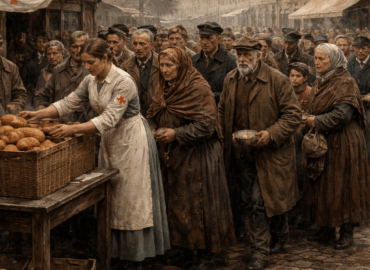
Poperinge is less than 20 kilometres from Ypres yet, because it lay outside German artillery range, it grew into the “capital” of the Salient. British troops nicknamed it “Pop” and thousands of soldiers passed through its camps and streets every day. Private Allan Tobson of the 39th Divisional Field Ambulance wrote that if Ypres was the key of the Salient, Poperinge was the key of Ypres. The main road through town became the only way troops and transports could reach the front, so congested that Captain A.O. Pollard recalled mules, limbers, endless ammunition columns, siege guns, lorries and dispatch riders all going about their business in orderly chaos. During the height of the Third Battle of Ypres more than 500,000 soldiers and their equipment moved through Poperinge.
Your guide will take you along the old Poperinge–Ypres road and stop at Talbot House, a soldiers’ club where men relaxed between journeys to the trenches. Nearby you’ll see where the Royal Engineers built a new Switch Road in 1915 to ease traffic. The area was dotted with munitions dumps, workshops for repairing guns, and field kitchens turning out thousands of meals a day. We’ll visit the sites where these depots once stood and look at photographs and maps showing how Poperinge became a supply city.
Railway and supply networks
Supplying the Salient was a constant challenge. Light railways, with their narrow‑gauge tracks, carried supplies from the big dumps to forward refilling points. They could be laid quickly and relocated as the battlefront shifted. Motor transport was also used, but early lorries were unreliable and devoured resources; fodder for the horses pulling wagons took up more transport capacity than food and ammunition for the men. Our tour traces the remains of these light railway lines and visits the sites where supply trains unloaded at the Poperinge rail‑head before goods were transferred to wagons or mules.
One memorable stop is Brielen, north of Ypres, where Royal Garrison Artillery gunners were photographed unloading shells from a light railway train on 3 August 1917. We will also see the route of the Roesbrugge–Abeele–Poperinge line, which funnelled traffic from the Channel ports to the Salient, and visit the remains of small road‑head dumps where soldiers carried supplies the final mile to the trenches at night.
Practical information
This private logistics tour lasts around eight hours. We pick you up at your accommodation in Bruges and travel in a comfortable vehicle along quiet back roads. The pace is moderate with several opportunities to stop for lunch in Poperinge. The tour operates year‑round but is most evocative in spring and autumn when the fields are green. Good walking shoes are recommended as some sites are on farm tracks.
Planning your visit
Ready to trace the backbone of the Ypres Salient? Book your private logistics tour today via Visit Flanders Fields and explore Poperinge, light railway routes and supply depots that kept the frontline alive. For more inspiration, see our full range of day tours at Flanders Battlefield Day Tours.
FAQs
Where does the tour start and how long does it last?
We depart from Bruges and spend about eight hours exploring Poperinge and its logistic sites. You’ll return to Bruges in time for dinner.
Are the sites wheelchair accessible?
Most of the stops are outdoors on level ground, though some light railway embankments are uneven. Please let us know if you have mobility concerns and we will adapt the itinerary.