Published: 4 April 2026
Intro
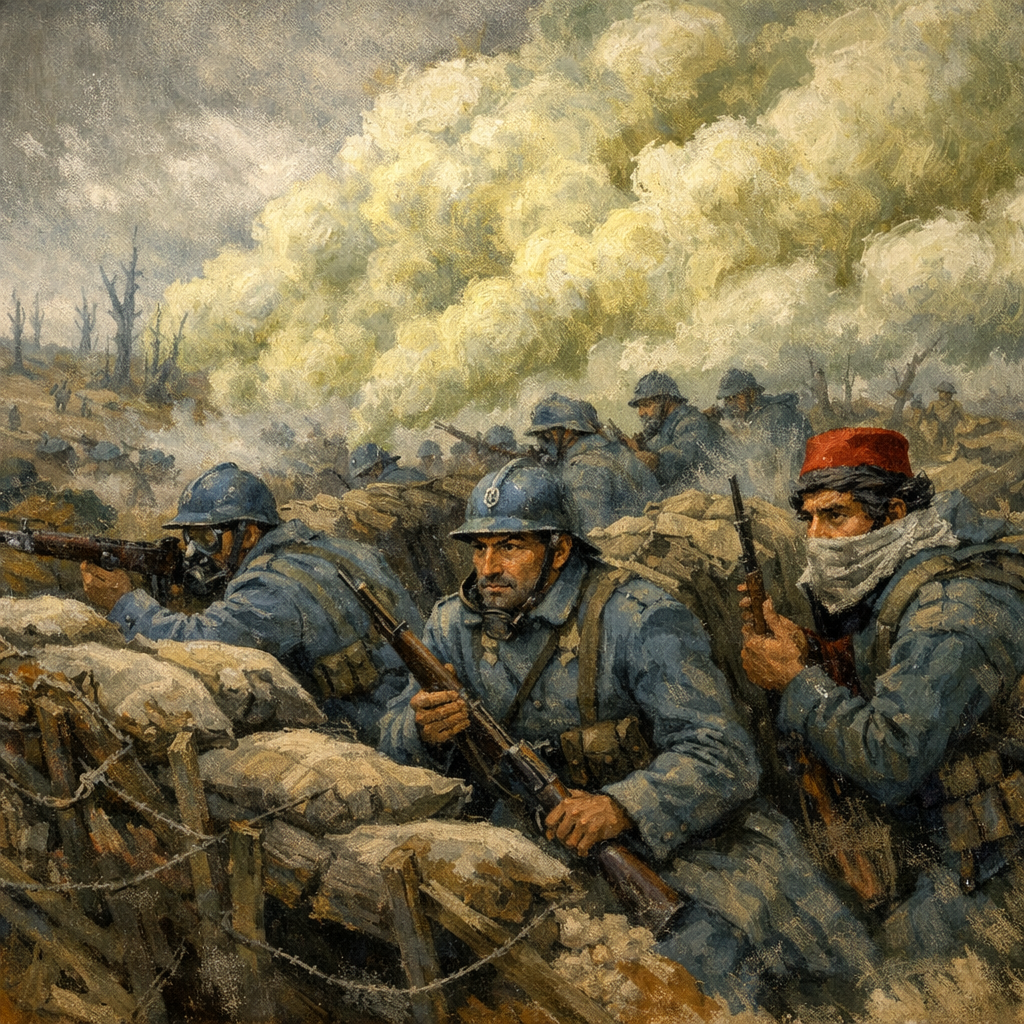
When you set out from Bruges to explore the Ypres Salient, it is easy to focus on the familiar Commonwealth story. Yet the early defence of Flanders owed much to the French Army, particularly the North African troops who held the line just north of Ypres. In April 1915 the Germans unleashed the first mass gas attack on this sector, releasing 160 tons of chlorine gas into a light breeze. The French defences collapsed, leaving a 6.5 km hole, and the responsibility for plugging it fell to Canadians. This guide will help you appreciate the French role and show you how to visit the sites where their sacrifice is remembered.
French lines and the first gas attack
The Ypres Salient was formed after the First Battle of Ypres in 1914, when British and French troops halted the German advance. The French 45th (Algerian) Division occupied trenches from Steenstraat to St Julien. On 22 April 1915 the Germans selected this sector for their first chlorine gas attack. Cylinders dug into the forward edge of the German trenches released a thick yellow‑green cloud that drifted over the French lines. The troops were unprepared for the suffocating fumes; many died at their posts, while others fled in panic. Within hours, an enormous gap opened in the Allied line. Although Canadians later stopped the German advance, the French losses were heavy, and thousands of African soldiers lay buried in Flanders.
Traces of the French on today’s battlefield
Several places around Ypres still bear witness to the French defence. At Steenstraat, a little monument marks the place where French Algerians turned to flee as the gas rolled in; the canal nearby offers a sombre view of the Yser Canal defences. North of St Julien stands the Monument aux morts des Armées françaises, a granite obelisk honouring the French dead. The French Cemetery at Saint‑Charles de Potyze contains the remains of over 4,000 French soldiers who fell in Flanders. Private tours from Bruges can take you to these sites, and your guide will tell stories of the colonial troops who fought alongside their European comrades. Listening to letters from a Zouave who survived the gas cloud or visiting the quiet graves of Breton soldiers provides a fuller understanding of the multinational nature of the Salient.
Practical information
This tour lasts about eight hours and departs from Bruges. Your guide will drive you towards Ypres, stopping at canal crossings such as Het Sas, St Julien and Potyze. Comfortable walking shoes are recommended for cemetery visits. Because these sites are less frequented than Tyne Cot or the Menin Gate, you will have time for reflection. The tour is private and can be tailored to include lunch in Ypres or an evening at the Last Post ceremony. Accessibility accommodations are available on request.
Honour the French defenders
Walking the northern trenches of the Ypres Salient reveals a story often overlooked: the courage of the French and their colonial regiments in 1914–15. Standing by the memorial at Potyze or overlooking the canal at Steenstraat gives meaning to their sacrifice. When you are ready to deepen your understanding of this chapter of the Great War, secure your place on a private Flanders Fields tour. Explore our other blog posts on winter trenches, dressing stations, and battlefield pilgrims, and feel the human scale of history.
FAQs
Where were the French trenches in the Ypres Salient? The French 45th (Algerian) Division held the line north of Ypres, around Steenstraat and St Julien, until the gas attack of 22 April 1915.
Can I visit French memorials near Ypres? Yes. Sites such as the Monument aux morts des Armées françaises and the Saint‑Charles de Potyze cemetery are open to visitors and can be included in private tours from Bruges.